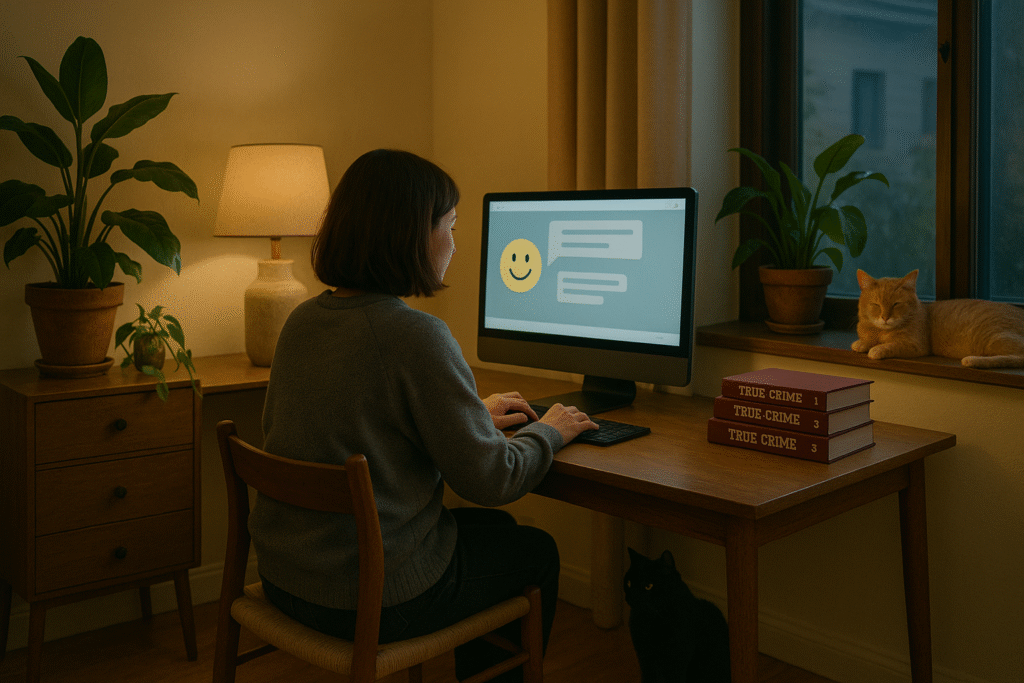
A couple of years ago, I finally realised that I’m never going to be good around most people, so I decided to make the most out of having AvPD by trying to create minimal social situations that don’t leave me feeling on the edge of a panic attack due to feeling so utterly worthless and incompetent around most people.
Over the years, I’ve learnt what type of social situations stress me out, which is most of them! But I’ve realised I can get my social fix (validation?) in certain ways.
Those Awful Mental Health Cafes; Kill Me Now
Have you ever been to any of those mental health cafes where you meet others with the aim of making friends with people who “get it?” I find them absolutely awful. Not only am I the quietist, most nervous out of the lot – I also find these gatherings utterly boring and pretty pointless. I kept going to them for years though, thinking that maybe it would get easier and I might even enjoy myself at some stage in the future.
I mean, these little gatherings are created by mental health experts, so they must work for people?
Going to them made me feel even worse, because I thought if I can’t fit in with these people, then I am obviously beyond help!
I finally admitted to myself that these get-togethers just made me feel like shit and I’d get much more enjoyment reading a good book at home or doing other solo stuff.
If you try something repeatedly and still don’t like it, then maybe it’s time to give it up, no matter if it’s what the professionals suggest. We are all different in our anxiety and AvPD, and these things aren’t for some of us.
Online Friendships: Connection Without Performance
One of the most important ways I’ve learned to cope – and yes, even connect – is through online friendships. I’ve had a friend since 2019 who I’ve never met in person, but we’re involved in each other’s lives. Even though most of our conversations happen online (and occasionally on the phone), it makes me feel less alone, and on especially difficult days, chatting to my friends online can make me feel better.
This friend doesn’t have AvPD. We met in a forum for people interested in alterative therapies and started to PM each other when an argument blew up between a group of people.
We both quite like a drama and we can be in hysterics with our back and forth emails. I know about her family issues, relationship highs and lows, and that her brother is a bit of a twat. These things make me feel less alone, and without her I don’t know what I’d do. I’ve told her all about my weirdness, but we just get on anyway.
Our emails don’t start with airy-fairy talk about the weather; we just dive straight in with things like, “Has he contacted you yet?” or “Pervy Nigel was peering into my kitchen window again last night. What would you do?” We skip the small talk and get right to the drama – it’s therapeutic and unfiltered, like a friendship built on gossip, survival instincts, and occasional mutual dread.
That’s what making the most out of AvPD can be like: creating closeness in ways that bypass the panic of face-to-face interaction.
In conversations, I need time to process what people are saying before I can reply, and by the time I’ve thought of a response, the other person has already started talking again leaving me hanging.
Lately, I’ve also started looking for online friends who do live with AvPD or similar issues. But, crikey, it is so difficult to find people you get along with. It is for me anyway. Obviously, just because two people have AvPD, doesn’t mean they will get along.
Putting ourselves out there (with limits) is part of making the most out of AvPD. I believe most of us need someone to share things with.
What I’ve learnt is this: It can take months or even years to meet people online who you feel relaxed with and who offer real friendship.
Over the years, I have gone into various groups asking if anyone has such bad anxiety that they prefer to live alone. I would get several people replying saying that yes, they are totally alone in the world, but then it turned out that they were either married, lived with their parents, or had a bit of a working social life.
So then I started to ask if people had general anxiety. I would get several replies again but most of these conversations would peter out. If you have tried, you’ll know what I mean.
It’s a numbers game unfortunately and it takes time.
Hobbies: True Crime, Cats And Animals In General
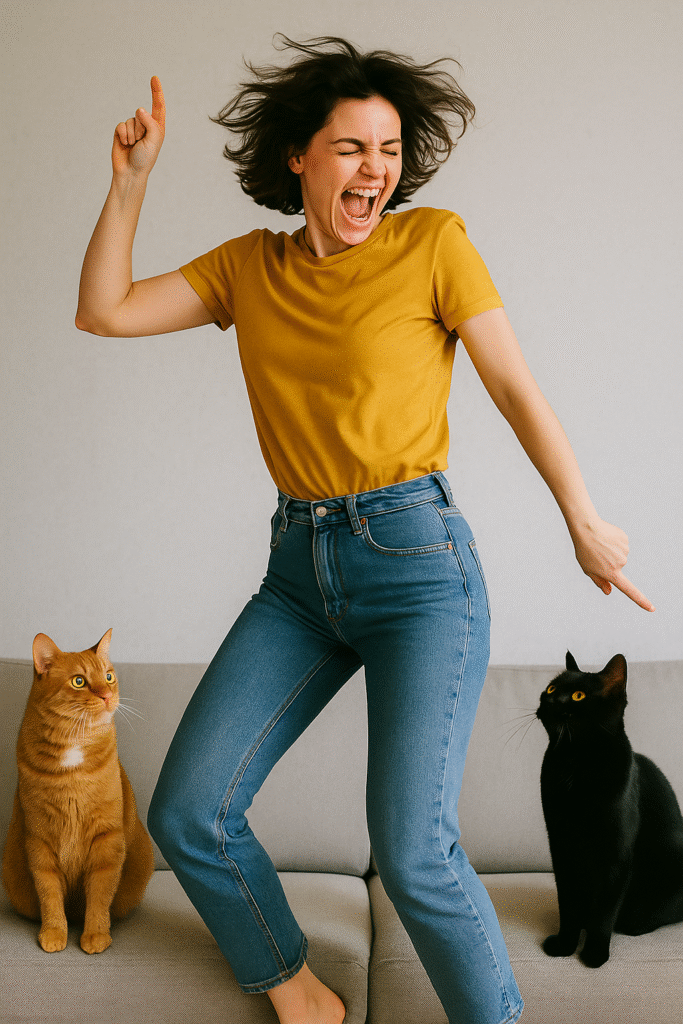 When you spend most of your life alone, you have plenty of hours to fill. I read a lot of true crime books, especially the ones about serial killers and the psychology behind them. I know it’s dark, but reading about such awful things can leave me hanging, but this time, in a good way. It’s total escapism for me. I also love those true crime docs that come up on Prime video and Netflix.
I have to say though that if I continuously read or watch something (escapism), it makes me depressed, and I’ve learnt that getting back into the real world, doing life admin and hopefully doing something for the future makes me feel better.
I also live with two rescue cats who keep me busy and stressed out (vet bills). I can’t imagine life without them. I must have lost the plot because I’ve been known to dance for them (they look horrified) and we play hide and seek.
Am I the only person who lays flat in the bath, hiding from cats, barely able to contain my giggles?
Still, there are days when doing hobbies in complete silence, with no social interaction, makes me feel really low. That’s when I hit Reddit and Facebook, posting about my woes and replying to other peoples’ posts. I’ve found that the right mix of solitude and connection can keep me afloat.
That, again, is part of making the most out of having AvPD: building something that balances escape with emotional survival.
The Power Of Small Interactions
I’ve finally accepted that I’m not someone who thrives at parties or community groups (unless I’m off my head on vodka, then I wouldn’t care). I’ve stopped forcing myself to attend social events that only increase my anxiety.
Sometimes, the smallest interaction can lift my whole day. A word with the postman. Nodding at a neighbor while taking the bins out (just please don’t come over and chat to me – not unless you hang off my every word and adore me and make me feel great, because anything less makes me feel like shit). Giving way to a driver and getting that little thank you wave. These brief, surface level moments don’t ask much from me, but they offer a little spark of connection.
Because my anxiety is back to front, I’m actually more comfortable with transactional interactions – appointments, deliveries, that sort of thing. If someone is being paid to talk to me, it oddly gives me confidence. The gardener needs me to pay him. The doctor is paid to listen. That exchange makes me feel less like I’m a burden. Weirdly, hospital visits and dental checkups often cheer me up more than small talk at a party ever could.
Making the most out of AvPD can mean noticing what works for you, and going along with that.
Know What Works. Get Rid Of What Doesn’t.
One of the biggest things I’ve learned is this: you don’t have to live according to anyone else’s social blueprint. You just need to pay attention to what works – and what doesn’t – and make adjustments from there. The difficulty is finding what works for you but with trial and error, you will know.
Making the most out of AvPD – for me – means being honest about my limits, and not forcing myself into a mold that doesn’t fit.
And if you want to work on your social fears, you can. Talk to one new person. Try something small. But sometimes the bravest thing isn’t pushing yourself harder, it’s accepting what doesn’t work and being done with it.
I think it’s about knowing which type of person or people you would feel comfortable around and what you want from them to make you feel good enough.
Making The Most Out Of AvPD: Not A Slogan, But A Strategy
I live a reclusive life now, and honestly, it suits me. Not because I don’t long for connection – I do – but because I’ve stopped trying to force the kind of connection that stresses me more than it helps.
There are hard days. There’s loneliness. But there’s also relief in no longer auditioning to be the most likeable or easygoing person in the room. That pressure is gone.
I do still try to make connections, but I have learnt that I have a certain criteria for them.
Making the most out of AvPD doesn’t mean pretending it’s a superpower or trying to turn it into something it’s not. It means figuring out how to live alongside it, with compassion, creativity, and honesty. It means building a life that suits your nervous system, your preferences, and your need for peace.
It might not be a conventional life. But it can still be a good one.
I sometimes remind myself that the grass isn’t always greener; all those people with jam packed social lives and endless group chats? They can be just as suicidal, depressed, and hollowed out as the rest of us – they’re just doing it in company. So no, I might not have a bustling social circle, but at least my misery doesn’t come with a side of performative small talk and bottomless mimosas. Alone doesn’t always mean lonely – sometimes it just means you’re not pretending.
 Further Reading And Resources
Humans need solitude’: How being alone can make you happier – Explores how alone time can be good for you.
Why Some Loners Are So Happy – Discusses research on the positive aspects of being a loner, including mental health benefits.